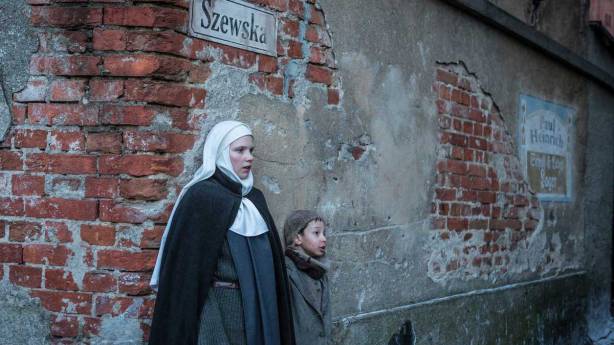
Image via http://www.nziff.co.nz

It is Poland in 1945 and, at an isolated convent, a novice escapes and treks across country in the snow to find a doctor. A Red Cross nurse, Mathilde (Lou de Laâge), follows reluctantly and finds a nun in labour. As she stays and then returns to help, she discovers that the sisters hold a secret that has left none of them unscathed and will, in turn, profoundly affect Mathilde.
It is a sad sad tale but the film does a good job of finding some joy and heart in it so we do not feel bereft. The spartan world of the convent is contrasted with the busy chaos of the Red Cross station and the menacing lawlessness of the Russian invasion. The convent is a world unto itself and, at first, the many nuns seem the same, the only noticeable difference the white wimples of the novices. We are immersed in their lives and slowly the different characters and personalities emerge. We begin to understand the fragile nature of their faith and the different reasons they are there. We can also see the danger of a belief system that relies on punishment and self blame and confuses sin with vulnerability in a world where power is not equal.
Although this is a warmhearted film that makes sure to leave us with hope, I couldn’t help feeling desolate at the power of the external and internalised misogyny. How can we live in a world where this kind of treatment of women is accepted? Although we can easily separate ourselves from the currency of this through the historical setting of the film, there was no part of me that felt it was a reality that had been left behind.
I can see the penitence and crisis of faith of the nuns as a metaphor for the anguish of every woman: how can God love us and want this? How can our fellow humans value us and want this? I do not have the answer.
Currently screening at Cinema Nova
Bechdel test – pass
 fillums