
First-time feature documentary director Kier-La Janisse gives us a fascinating deep dive into the world of ‘folk horror’ films and what they say about fear, colonialism and the ‘other’.
At more than three-hours long, and probably made to be a series shown on television, I was expecting it to be a hard slog but I would have gladly watched more. The exploration starts with three early British films – The Witchfinder General (1968), The Blood on Satan’s Claw (1971) and The Wicker Man (1973) – and the particular impact of British history and fable on folk horror. It then expands out to look at iterations around the world, including those that stem from a celebration of First Nations people and, more commonly, those that show the need for colonists to demonise and subvert them.
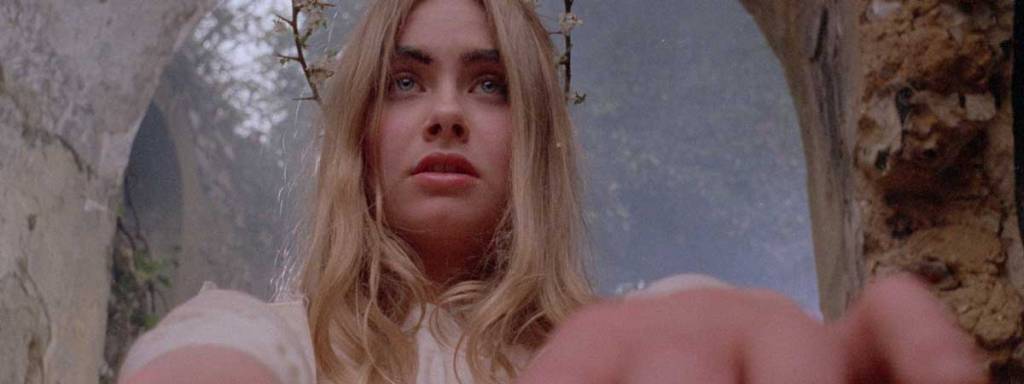
With clips from over 100 films and interviews with 50 or more people, from historians to film makers, it is a fascinating journey that gives context to to an evolving and changing genre of film. It is interesting to learn how fictionalised representation of folk culture can replace the reality in people’s understanding, such as general beliefs in hoodoo and voodoo. Also how Australian Indigenous culture can permeate a film without it being overt, such as in Picnic at Hanging Rock (1975).
Folk horror is seeing something of a resurgence in the past decade, with Hereditary (2018) and Midsommar (2019) being two high profile examples and La Llorona (2019) being one I have seen most recently. It’s a fascinating subject which has sparked in me an interest in searching out more.
Have you seen this film? Let me know your thoughts in the comments below.
 fillums
Pingback: 1000 Women in Horror (2025) | fillums