
Clips from the US ‘reality’ TV show Hard Core Pawn occasionally appear in my socials and its depiction of pawnshops is firmly rooted in the capitalist myth that those without somehow deserve their lot. The owners unapologetically buy low and sell high and aggressively eject the many grifters trying to con them with worthless or stolen junk. In Lukasz Kowalski’s empathetic observational documentary Lombard, we see poverty in all its forms in Poland’s largest pawnshop.
Boss Wiesiek lives in a fantasy that success is just around the corner. Having moved the shop to a former supermarket in the Bobek district, he seems oblivious to the downturn in sales, buying and bartering endless amounts of oddities from antlers to microwaves. His partner Jola chain smokes and wears a succession of fur coats taken from the racks. Youngsters Aga, Roksana and Tomek are a dour lot, roaming the vast and crowded aisles, photographing items for the website, using the gym equipment and sharing advice on relationships.
We can see what Wiesieck does not; that the business is failing as they have moved into a poor area. No one can afford to buy, and what they have to sell they do so out of desperation to survive. Jola and Aga can’t help themselves, finding tasks for locals to do so that they can give them a hot meal without embarrassment, buying items they can’t sell just so a person can buy bread.
At the end of every week, Jola rails at Wiesieck that there are only a few Euros for wages and we can see how close they all are to poverty. It’s hard to ignore the different situation for the women we see. They are carers, victims of abuse, responsible for the well-being of their children and putting food on the table. Aga, for all her bravado, is stuck in a seemingly inescapable pattern of abusive relationships. Wiesieck tells them to smile more while he, we suspect, takes what he needs from the till.
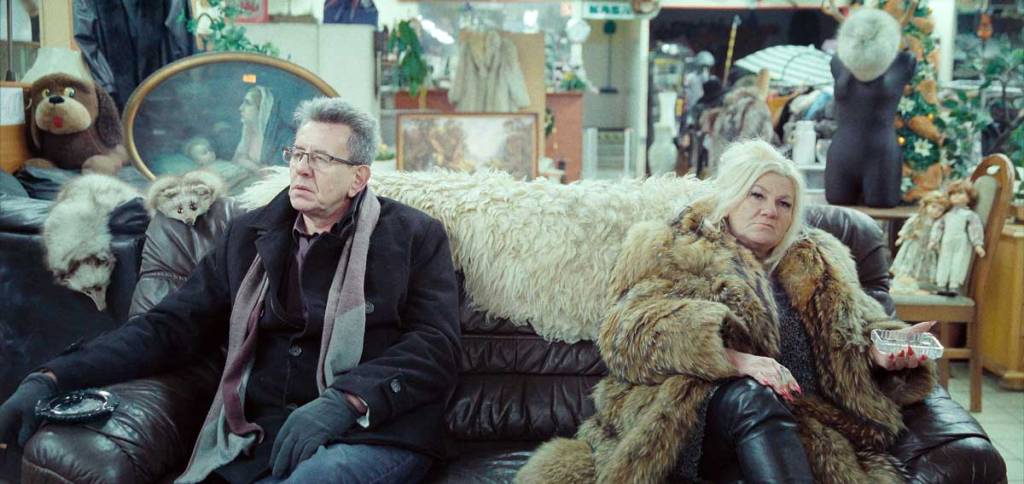
Kowalski doesn’t intrude, the camera observes and we watch and draw our own conclusions. Some of the scenes are so sadly perfect they could be fictional – the locals dancing at the Spring Fair, their last ditch effort to save the business, Wiesieck and Jola sitting on the couch smoking, surrounded by the faces of toys, furs and paintings.
An underlying thread is domestic violence and it is chilling to watch Roksana and Tomek’s relationship play out, in the knowledge of his propensity to violence. Her conversation with her daughter, “When we are little we think we can be anything. When we grow up we lose all confidence. Remember this.” shows the unavoidable cycle of poverty.
Kowalski doesn’t let us languish in sadness though. There is gentle humour aplenty and you can’t help but feel hopeful for these caring humans.
Have you seen this film? Let me know what you think?
 fillums