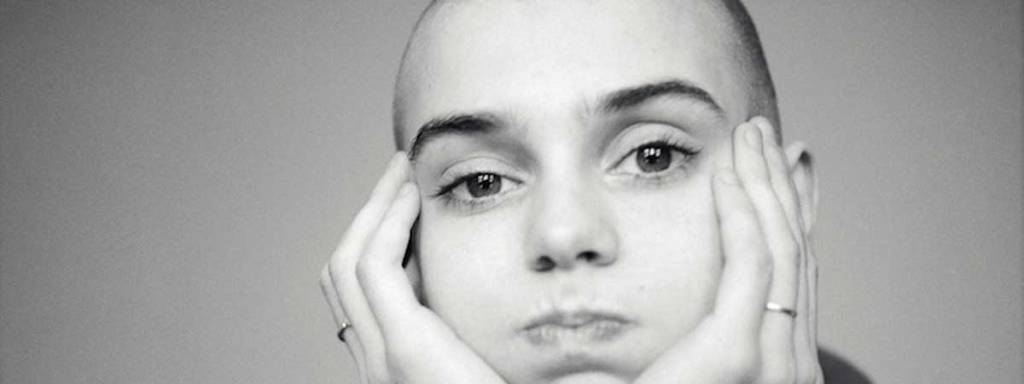

Sinéad O’Connor was ahead of her time, unapologetically outspoken for all the things we believed but didn’t have the courage to say.
I expected a pretty run-of-the-mill biopic for this documentary about Irish legend O’Connor and was happily disappointed. Her first album The Lion and the Cobra had a big impact on my musical taste and feelings about myself as a woman. I shaved my head in the early 90s and I doubt I would have had the courage or the understanding of it as a feminist act without her. It is still a life regret that I was too timid to front up to an after party of hers in London in the late 80s.
Structured with a narration by current day O’Connor, we are shown a wealth of footage that charts her childhood in Ireland and the beginnings of her career in London in the mid 80s. We can see from the outset that this won’t be an ordinary biopic, rather an exploration of her music and the political nature of speaking out against child abuse, racism and abuses of power.
She is in many ways a dichotomy. Obviously shy and introverted, she is softly spoken in interviews and eager to treat others well and to do a professional job. This contrasts with her powerhouse voice that belts out songs that cut to the heart of her own experience as a victim of child abuse and living in a country where racism is tacitly accepted.
We can see that she always had a strong belief in standing up for equality even when that made her unpopular. Right at the start when her record company wanted her to grow her hair long to be more feminine she shaved it off. Pregnant with her first child, they also wanted her to terminate the pregnancy so as not to affect the success of her first album. As it was, she was only photographed from the shoulders up in order to hide it and the US release of The Lion and the Cobra used a non-shouty portrait of her as it was ‘less aggressive’, definite foreshadowing of the problems she would have with US conservatism.
There were early signs of her nonconformity – painting a Public Enemy logo on her head when performing at the Grammys – but it was two incidents in the early 90s that caused outrage in the US and spelled the end of her international career. The first was a refusal to perform if an obligatory national anthem was played first, the second was singing Bob Marley’s War a cappella on Saturday Night Live and then tearing up the photo of the Pope that her (abusive) mother kept on her wall with the words “Fight the real enemy.”
There is bitter irony in the fall out of this second act as we all now know that she was right to protest the Vatican cover up of clerical child abuse in Ireland. The documentary presents her courage and outspokenness in the face of massive censure as paving the way for so many female artists of today being able to speak out. The righteous anger of women. At the time she was painted as a crazy woman and firmly believed that the response wouldn’t have been the same if she was male.
We learn a good bit about Ireland in the 70s and 80s – the Magdalen Laundries are shocking – and it is heartwarming to be shown what has changed today. The film doesn’t focus at all on O’Connor’s private life which feels appropriate rather than selective. It’s her music and her legacy that are important. And the music! It’ll make you want to go home and put all her albums on repeat. One of my first favourite songs – Troy – will never be the same now that I know it details her abuse by her mother. “Sitting in the long grass in Summer, keeping warm” is when her mother forced her to live in the garden for a week. As dusk fell, she would watch the light in her mother’s window until it switched off and she was left in the dark, “You should’ve left the light on.”
Although we probably think her career ended in the 90s, it didn’t, the media just stopped supporting her. She has continued to make albums and tour internationally. We end with her on stage looking as fierce as ever.
Have you seen this film? What’s your favourite Sinéad O’Connor song? Let me know your thoughts.
 fillums
Pingback: Stolen (2023) | fillums