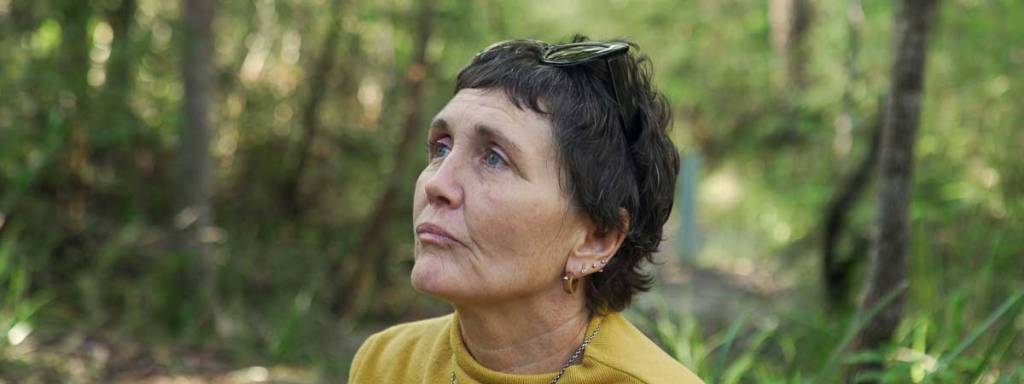
I walked into this film thinking I knew what kind of experience it was going to be. It’s a documentary by Sue Thomson about the growing number of women aged over 55 in Australia who are finding themselves unexpectedly homeless.
I was expecting a sobering and perhaps depressing journey, particularly as I fall into that demographic. It was clear how this topic resonates as there was a higher proportion than normal of audience members at the session I attended who are older women. What I didn’t expect was a nuanced and non-didactic treatment of this difficult and emotive topic.
Thomson lets us spend some time with a handful of women who for various reasons have found themselves unexpectedly homeless. Some we’re lucky enough to have a car or van that they could live in but then must deal with the challenge of either staying in one place so they can maintain work and social connections and come up against local law-enforcement trying to move them on, or take to the open road and leave family and friends behind. Some have found emergency housing, some live in caravan parks, some rely on a friend’s couch or spare room. Filmed over three years, we also see the impact of COVID lockdowns where, as Wirlomin Noongar author Claire G. Coleman says, the rest of the city was complaining while watching Netflix and ordering Uber Eats and she was struggling to find food and a safe place to sleep on the streets.
Thomson doesn’t rush into details about the women and takes time building a picture of how each person has come to this point in their lives. We can see what makes women’s lives more precarious as they age, from domestic and family violence to lack of a career through child raising or no superannuation. They flee abusive men and find themselves with nothing, have a landlord or partner boot them out for no reason or lose a job. What is remarkable is how hopeful and optimistic so many of them are.
Margot Robbie gives an occasional narration of statistics and context but thankfully this is kept to a minimum as it is the women’s stories that tell us the most. It is in personalising this issue that we can begin to understand the problem.
While introducing the film, Thomson said that she hoped to provide a resolution, an idea of what might be done but admits that there is none and in fact with COVID and the housing crisis, it is just getting worse. The problems of course are patriarchy and capitalism, that toxic combination that puts women at a disadvantage.
I think perhaps many MIFF goers like myself might feel safe from unexpected homelessness but, unless you own your own home and it is in your own name, we are all at risk.
Have you seen this film? Let me know your thoughts in the comments below.
 fillums
Pingback: Careless (2025) | fillums