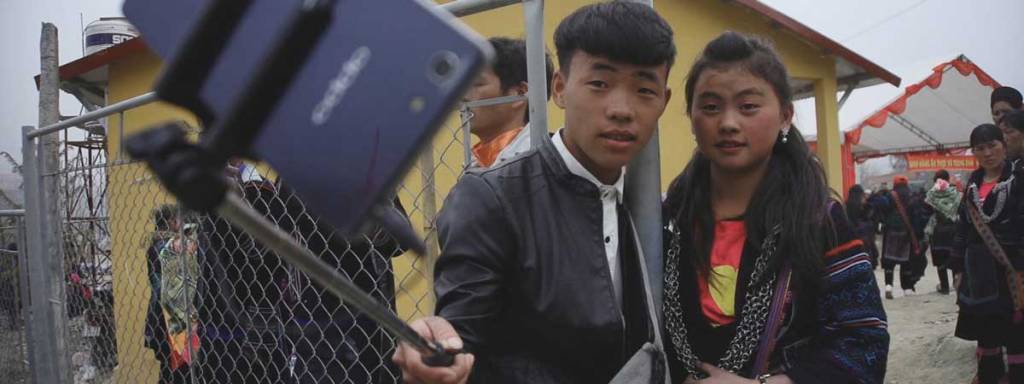

Documentaries don’t usually make me so angry I want to throw something at the screen. Vietnamese film maker Hà Lệ Diễm gives us unprecedented insight into Hmong culture and their tradition of bride kidnapping.
This is a remarkable feature. I feel the need to talk about the detail of the story so if you have any intention of watching this film and would prefer not to have any spoilers, stop reading here and come back later.
Hmong are an ethnic minority in China, Thailand, Laos and Vietnam and Hà felt a connection with her own childhood when visiting a Hmong village in Northern Vietnam to deliver film workshops as part of her university studies. She filmed a young girl, Di, playing with her friends and play acting being kidnapped as brides. Their cultural tradition allows boys as young as 12 to ‘kidnap’ a girl and bring her home to his house, forcing her to stay and then marry him. It’s not legal, it’s not always (ever?) welcome for the girls but it is a hard tradition to break. Di’s sister La was kidnapped at 14 and now, at 17, is pregnant with her second child.
Hà decided to make a documentary about these young people and lived with Di’s family for three years, filming over 100 hours of footage. She couldn’t speak Hmong so had to rely on basic interpretation from Di and then a translator to translate the footage so that she could understand what was unfolding. There’s an interview with her here where she talks about the experience.
What is so devastating is that we watch as a 14 year old Di pines over an ex-boyfriend, then chats to another boy, Vang, at the Lunar New Year festival, walking off with him as he reassures a concerned Hà that he respects Di too much to kidnap her and she is safe. She is not. The long drawn out process where she refuses to marry him is harrowing.
Tradition says that the children must decide and for a while it looks like this is the case. There are meetings between parents, talk of a dowry, sharing of food and Di’s refusal to drink a shot of rice wine that will seal her agreement. Di’s mother alternates between sobbing about Di ending up like her with a drunkard husband, encouraging her to refuse and then berating her for her stupidity. The school gets involved, and it’s a relief to see them talk of consent and urge Vang to wait until Di is 18 as it is best to have a wife who he treats respectfully and who loves him.
Tradition is a stronger force though, it seems, and although Vang is a nice enough boy, he is very entitled. He wants her and refuses to drink the ‘break up wine’, leading to a distressing scene where his relatives drag her screaming and crying from her house. It is only the intervention of Hà, pleading with Di’s mother, that saves her.
It’s possible that Hà being there with her camera both created this particular scenario for Di and saved her from it but we are seeing just a glimpse of the reality for young girls. Access to education might start to change this outcome, as well as the opportunity to see films like this one. As Hà says, many Hmong have never seen what actually happens and how violent it can become.
Have you seen this film? Let me know your thoughts in the comments below.
 fillums