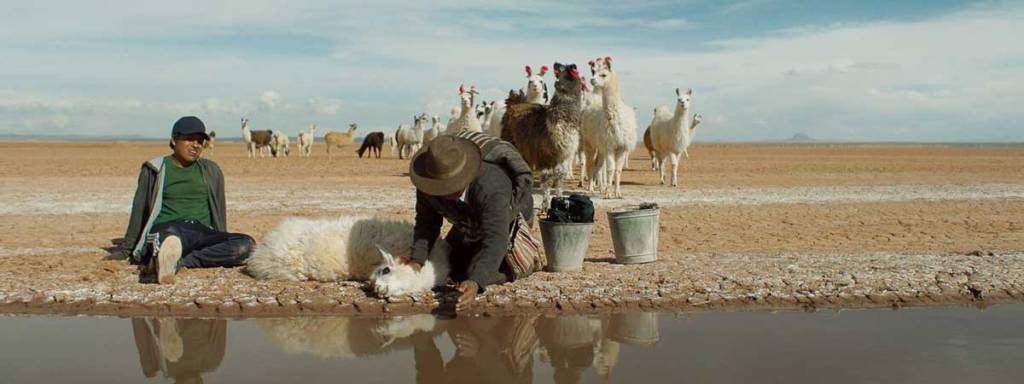
Alejandro Loayza Grisi’s impressive first feature reminded me of Aga (2018) in its often wordless depiction of indigenous peoples eking out an existence in a vast and remote plain.
High on the Andean plateau in Bolivia, elderly llama herder Virginio (José Calcina) and wife Sisa (Luisa Quispe) life in an isolated stone hut. The walk to the village for buckets of water culturally falls to the wife and so Sisa makes a slow walk every few days to the village pump. The rains haven’t come, though, and climate change seems to have balanced their livelihood and existence on a precipice. Without rain, the llamas are suffering, their crops won’t grow and Sisa has to walk further to bring home drinking water.
Grandson Clever (Santos Choque) visits from La Paz and tries to convince them to move to the city. Virginio will have none of it, epitomising stubborn pride and adherence to tradition even though he is seriously ill.
Although the effect of climate change on indigenous peoples is obviously a theme, what stood out to me was Virginio’s inflexibility around traditions that gave him all the decision-making power. From refusing to walk to get water because that was Sisa’s job to wanting her to die with him, it made him hard to like.
Grisi’s experience as a cinematographer can be seen in the wide, bleached vistas and beautifully framed and lit small moments. The dryness is so real it makes you thirsty.
Utama (which means ‘home’) will transport you to a world you probably have not experienced and give you some insight in who might be affected by climate change first.
Have you seen this film? Let me know your thoughts in the comments below.
 fillums