
I feel like there should be a single word or term for films like this, that provoke intense emotion and are beautiful but are telling you something fundamentally tragic and melancholic about the world. I’ve seen a few MIFF films that would fit this. Maybe bittersweet, but it feels more profound than that. Tristesse. Dolorous.
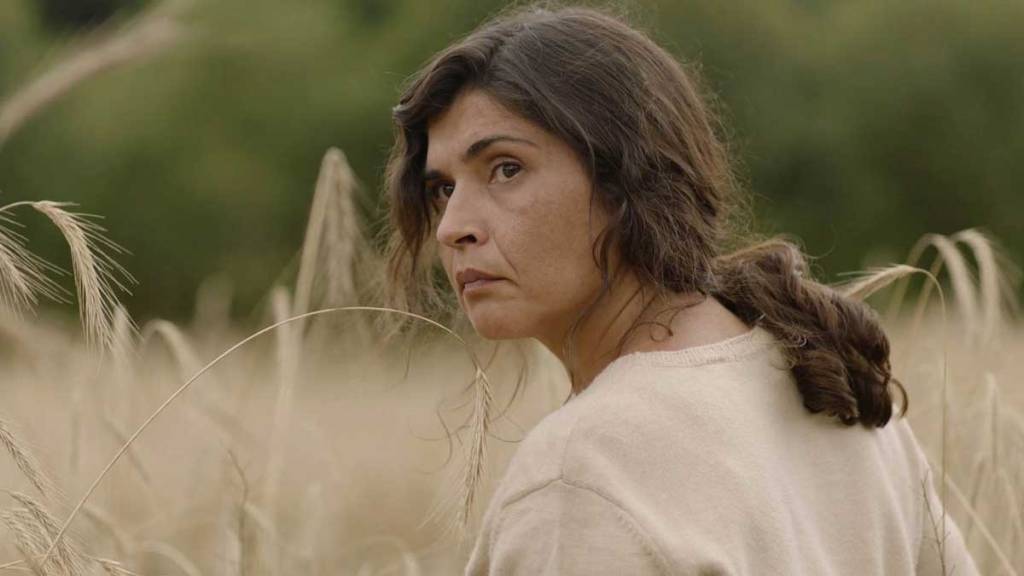
The Rye Horn is directed by Jaione Camborda and set on a rural Spanish island sometime in the 70s (think Franco-era). Maria (Janet Novás) is a midwife, but not necessarily medically trained. She is the woman that women come to when they need help, and the opening scene of the film is around 15 minutes of watching a woman in labour. It’s one of the most realistic depictions of labour that I’ve seen in film and it’s not gory or graphic at all, just focusing on the emotion of the woman giving birth and of Maria. You feel the heavy burden and intensity.
Maria is faced with a different kind of problem when teen Luisa (Carla Rivas) comes to her asking her to end her pregnancy. Initially reluctant, but having experienced herself what can happen when you try to give yourself an abortion, she agrees to help her by harvesting the rye horn – the ergot fungus growing on the grain head, a natural abortifacient. Secrecy is of course important, and so when Maria’s involvement in the abortion is suspected, she goes on the run, eventually ending up in a village in Portugal.
It’s quite an intense film, particularly as the camera keeps close to show the emotion and experiences of different women. The way Luisa’s abortion is treated is quite similar to the birth and we can see the similarity and the burden of both.
The film takes its time to tell its story and it really is all about Maria and the choices she is forced to make because of the requirements of the society at the time. It’s sometimes quite hard to watch, and there is a persistent feeling of melancholy and doom as she is forced from one challenge to another. Light in the dark is the women who help her along the way and there is some beauty in this. As one of them, Anabela (Siobhan Fernandes) says, “That no longer exists. What exists now is this.”
There is a lot of focus on the physical burden that sex and motherhood – or the lack of it – play for women and Camborda doesn’t help us get into the head of Maria or show any alternatives other than being judged/judging ourselves by our bodies. It ends on a more positive note, although you are made to wait for it. I kind of wish that motherhood wasn’t shown as the salvation for all women, that there was a purpose other than biology. I left feeling that feeling – sad but moved but sad.
 fillums