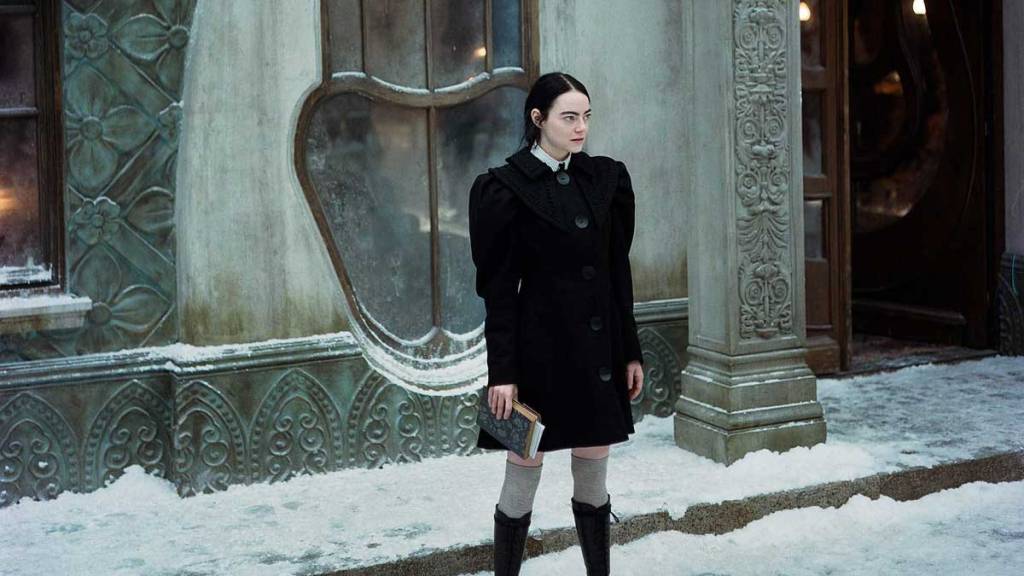

Such a relief! I thought this latest English language feature by Yorgos Lanthimos might have his incisive gaze diminished by Hollywood capitalism but it is on par with some of his early gems, albeit with a more inspiring, less bleak ending.
It’s not the easiest film to watch, particularly in its first act where orphan Bella Baxter (Emma Stone) is the living experiment of the perhaps monstrous Scottish surgeon Godwin Baxter (Willem Dafoe). She seems intellectually and physically disabled but soon we learn that her brain is literally that of a child and we watch her learn about the world and her place in it.
Godwin co-ops medical student Max (Remy Youssef) to study her and ultimately protect her from the dangers of the world. Enter dastardly villain Duncan Wedderburn (played just right by Mark Ruffalo) who whisks her away on an adventure.
The world seems Victorian but with a Dali surrealist steam punk vibe. It is a black-and-white world until Bella heads off with Duncan, a shift from infantile confinement to a technicolour world full of wonder and horror.
Lanthimos is at his best when he takes a world, changes one fundamental thing and has all the characters play it straight, even if that change is bizarre. In The Lobster, it was the social ostracism of single people and the adulation of relationships regardless of their quality or benefit. In doing so, he shines a light on something we accept as the norm that is perhaps monstrous.
In Poor Things, that monstrousness feels like patriarchy, class and the oppression of women. Bella is a blank slate, learning the ways of the world from men with the blunt questions of a child. In some hands, this could be about her vulnerability – and it’s hard to watch her learning about desire from adult men when we know the truth about her mental age. It’s a relief when Lanthimos allows Bella to have agency, to be fearless and without shame. It makes you wonder what the 20th century would have been like if Victorian England had allowed women to have choice and control and dispensed with misogynists, rapists and narcissists as adroitly as Bella.
There are some wonderful secondary characters – Hanna Schygulla as Martha Von Kurtzroc, surely the Bella of her future, Kathryn Hunter as brothel madame Swiney and Margaret Qualley as Felicity, Bella mark two. The costuming of Bella is exquisite and gorgeously Georgia O’Keefe-like – labial excess and translucence. And those intertitles!
It’s not quite a five star for me – it didn’t transform my view of the world or myself but it came close. It may edge up half a star over time.
 fillums