
“You said you liked me.”
“That was last semester.”
There is something that feels deeply personal about this debut feature by Korean filmmaker Kim Bora. It immerses you in the frustrating powerlessness of a 14-year-old girl, Eun-hee (Park Ji-hu) as she tries to find meaning, connection and love for herself and those around her. It also seems to be about the South Korea of the 90s; caught in the middle of immense political, social and economic change and trying to find its own identity and power.
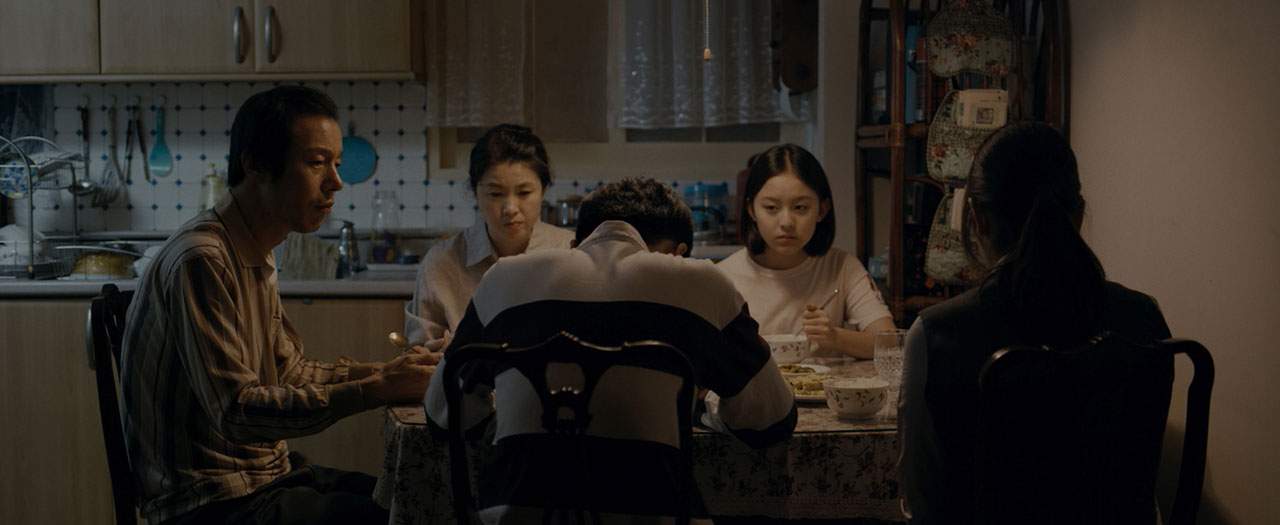
Eun-hee feels like a loner. The story is hers and we see her struggle at school, marginalised by the heartlessness of her peers, flirt with love with Jiwan (Jeong Tunseo) and try to be the daughter her family expects. The stifling pressures of family expectations seem the most damaging. Limited by cultural imperatives of diligence, modesty, Stoicism and family honour, her father (Jeong Ingi) shouts, her sister Suhee (Bak Suyeon) absconds, her favoured brother Daehoon (Son Sangyeon) beats her and her mother (Lee Seungyeon) drifts dispiritedly. There is little overt sense of connection or love, the only kindness when her mother serves her food.
Eun-hee has moments of joy and certainty. Escaping to a disco with hagwon (cram school) friend Jisuk (Park Saeyun), she attracts the adoration of fellow student Yuri. In hospital for a minor operation, she is treated with kindness by her elderly roommates. It is cram school teacher Kim Youngji (Kim Saebyuk) who has a lasting impact. She seems to be the first person who sees her, whose approbation is unconditional.
It’s hard not to be shocked by the coldness of Eun-hee’s family. I assume it is the weight of cultural expectation that keeps them isolated within their own disappointments. We see Eun-hee’s father shout but also dance when no one is watching and cry when he sees the vulnerability of his daughter. Daehoon seems to be given priority but we are given insight into the ramifications of such a pressure to do well academically. South Korea is the only country where suicides have increased since the 1990s and has the highest adolescent suicide rate of all OECD countries.
Park Jihu handles the intense focus on her character with aplomb. The impassivity of her face doesn’t quite mask the turmoil of her emotions and in her I recognised aspects of myself at 14; trying on personas, dancing to music at full volume when home alone, slowly discovering the world outside of my family.
As a debut feature, House of Hummingbird is beautifully crafted and confident in its story. It is languid and gentle and never feels compromised by nostalgia. There are points where it starts to drag a little and it is quite long but I can’t think of anything I would leave out. It is bleakly real.
 fillums