
Oh my god, that ending!
This is not at all what I was expecting. I had read a few reviews and so I knew this was going to be slow and immersive and with that special lyrical exploration of nature that I’ve seen in other Japanese films. It’s by Ryûsuke Hamaguchi who also made Drive My Car and so I expected it to be well made and potentially challenging in pace and themes.
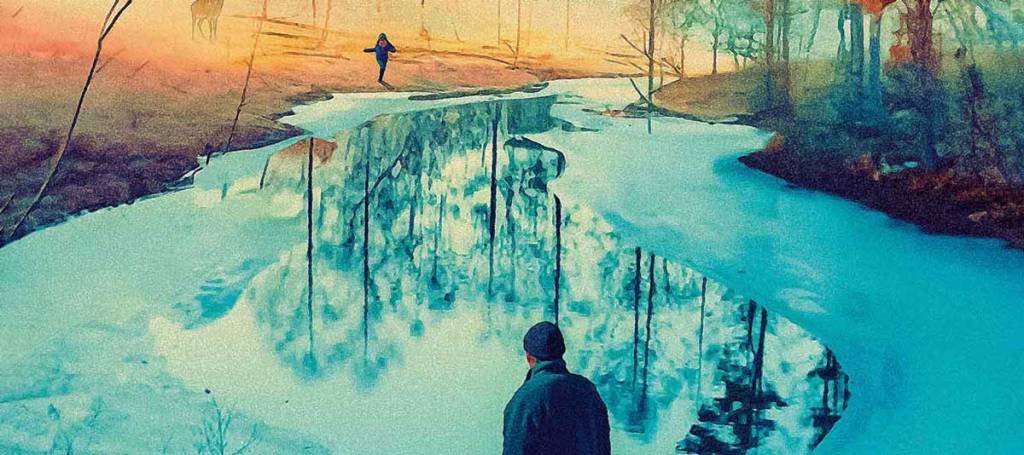
The film opens as it will continue, with a long tracking shot of trees, sometimes punctuated by music and sometimes by silence and diagetic sound. Through this snowy, wooded landscape we see a young girl dressed in blue, Hana (Ryô Nishikawa), intent on her own interactions with the trees and animals and water. Her father Takumi (Hitoshi Omika) is the odd job man from the village and it is from him that she gets her affinity with nature.
He chops wood, collects water from the spring and tells her the name of every tree and sapling. It’s a small village that has achieved a symbiotic relationship with the landscape around it and so the proposal by a city company to set up a glamping village is met with concern.
At the centre of the film is a consultation session run by a talent agency in order to hear the concerns of the villagers. The locals are quiet and calm, watching the promotional videos, listening to the slick presentation by the two consultants, Takahashi (Ryûji Kosaka) and Mayzumi (Ayaka Shibutani). It says a lot about the villagers’ quiet perseverance that they take the time to put forward their concerns with grace and patience.
It is this quality that convinces Mayzumi and Takahashi of the need for more research and to work in balance with the village and the environment. It is perhaps not surprising that the development company isn’t interested in this and so we have an uncomfortable situation where one side will need to yield.
The themes that run through the story are ones of balance with nature but also significant is the relationship between Takumi and Hana. He is a widower and although we see signs of Hana‘s mother, she is never mentioned. He is neglectful, so absorbed in the ritual of his days that he forgets to collect her from school. She spends most of her days running wild in the forest, something that we can see has benefits but also peril.
What will be talked about most with this film is the rather striking ending. I won’t go into details but I read an interview with the director afterwards to try and understand it better. The story that Takumi tells of the deer and the rare instances where they may be provoked into violence is a clue. I think in that moment, Takumi comes face to face with who he is as a person.
The title, Evil Does Not Exist, I think underlines this, referencing what is in people‘s – or animal’s – nature.
 fillums