
I’ve wavered a little in what I feel about this absorbing look at teenage motherhood. Does it get under the skin of these young women or are we to believe their biggest stressors will be boyfriends and poor relationships with their own mothers?
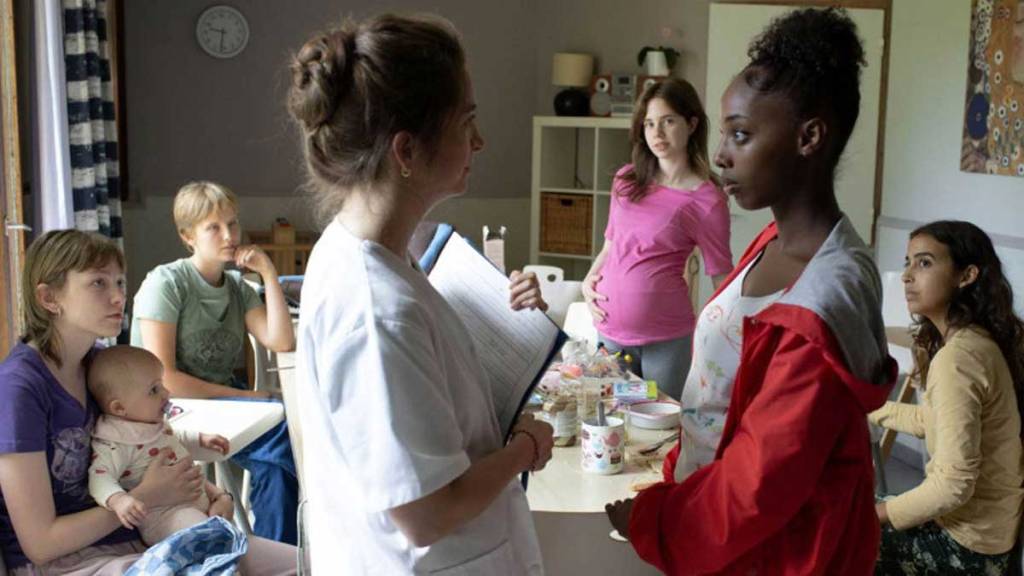
The Dardenne brothers know how to make solid character-driven stories about people who aren’t often at the centre of the narrative. With Young Mothers, we follow four teenage mothers in a shelter that aims to give them the skills they need to parent, or support them in the decision to give their baby to another family.
What is at first shocking is how young these women seem. We find out that one is 15 and some of the others, Jessica (Babette Verbeek) and Perla (Lucie Laruelle) in particular, seem younger. Other than impending or new parenthood, all four have some drama in their lives that they are trying to reconcile.
Jessica is pregnant and nearing term but her obsession seems to be around tracking down the mother who gave her up at birth. You get the feeling that Jessica has only decided to go ahead with her pregnancy because she wants to prove to herself that she is not her mother.
Perla can’t wait for her boyfriend to get out of some kind of juvenile detention so they can get a flat and start a life together with baby Noé. We know from his first desultory glance the chasm between the choice he will inevitably make and that with which Perla is faced.
Unlike the others, Julie (Elsa Houben) has a baby daddy who is present and willing and this shouldn’t feel like such an anomaly or cause for celebration but at least the minimum a teen mother should expect. Her demons are elsewhere and are just as much a threat to her future as a parent. My favourite was Ariane (Janaina Halloy), standing up to a toxic and addicted mother. In their arguments, we can read a whole history of what has brought them both to this point.
The Dardennes avoid moralising or painting the teens as victims or monsters and you can see the anguish of being thrown suddenly into adulthood and how ill equipped you are at 13 or 14 or 15. It feels a little like romanticism though in what we see and focus on – Jessica goes from pregnant with her water breaking to holding a baby and stalking her mother, as if the physical trauma of birth and the early weeks of bleeding and soreness and milk are not a major part of the experience.
It outstays its welcome a little. Once we get to the wrap up scenes for each girl, we are plodding a little through a flat narrative of redemption and tidied ends. These are minor criticisms though of an overall worthwhile story.
 fillums