
I think this one is going to be polarising. Judging by the impassioned conversations I had with fellow MIFF goers after the film, I can see there are many different takes on its confronting structure and content.
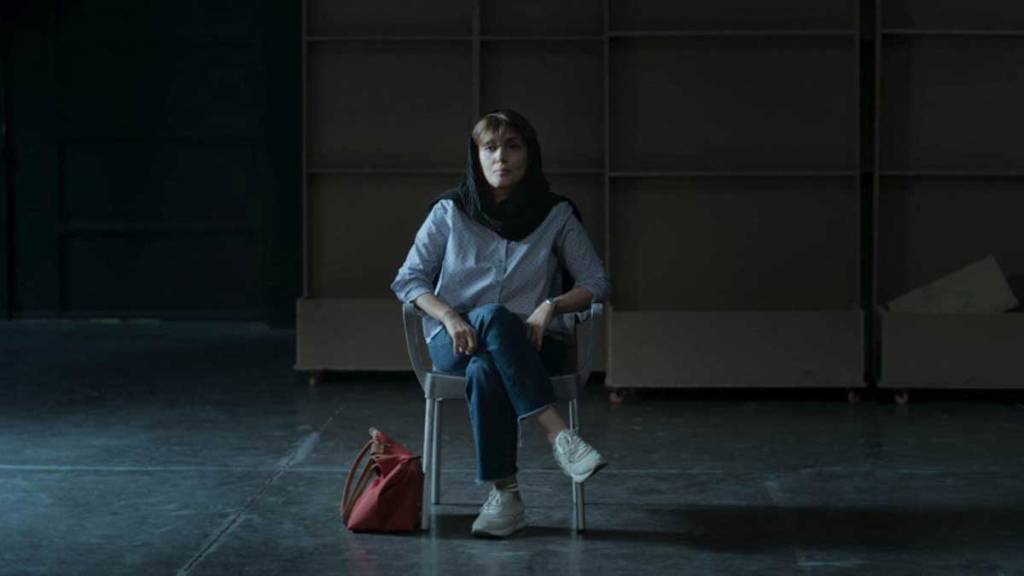
Filmed in secret in Iran by Mehrnoush Alia (who also made Scheherazade (2015)), knowing it is made by a female director shifts the way you view the film if you know it before it starts. It is a simple concept – there is an unseen male director behind a camera in an empty set. He auditions a succession of women, ostensibly for a role in a film based on the character Scheherazade in 1001 Nights. We cut between the women, some young with their only experience being school plays, others, like an older actress who is the ex-wife of the director, with a lot of experience.
At first the auditions seem benign, but small red flag start to appear – the director being the only one in the room with the actor, other crew members leaving and locking the doors, and the director asking gradually more and more intrusive questions.
If you’ve ever had a creep for a manager or prospective boss or anyone in a position of power where you are at a disadvantage, you’ll know what is happening. What is interesting is seeing the different boundaries for each woman. You can often see the moment in their eyes when they realise something is not right and the struggle they have with knowing what to do.
All those years of conditioning to be nice, to placate men, to believe it when you are told you are naive. Maybe you misunderstood? Maybe this is what needs to be done to get the part? Maybe you will make a fool of yourself if you say something. Maybe you won’t get the part and will not be able to achieve your dreams if you say something.
It’s not surprising that it is the older women who find it easier to speak up. With the younger women, it is the ones who have experienced this before and it is excruciating to see the character of the director get more and more abusive, breaking down the will of these young women.
I think what really struck me, a bit like watching The Wave, is that we are forced to sit there and watch and we hear all the things that men say. All the manipulations and rationalisations and we are forced to sit with it and listen. It is not just a sound bite to a #metoo story that we can believe is something of the past. It is a take down of revered directors and a chat with my MIFF friend Mike a few days later indicates that it may be a deliberate stab at the much loved Abbas Kiarostami.
Amongst my friends, there was a lack of agreement about the ending and I won’t say what it is here. I felt it was needed, for the sake of the audience to have a reprieve and that it was clear to me that it was all artifice, that we the audience were the ones being performed to.
I know this film is saying things that other films have said before, but I really like the discomfort and intensity of this one and, in the context of Iranian film it is an important statement but can also be applied to every moment like this that we continue to experience. Where would your boundary be? How much of that is based on your age or wealth or skin colour or gender or resident status or disability or sexuality?
 fillums