
A wrapped untouched candy. This would be a good alternative title, although Happy Holidays is so deeply ironic.
This absorbing story felt like layers slowly being unpeeled. It has a structure where we watch the story play out from the point of view of different characters in a family and those connected to them. Each time we get a little bit more insight into what is really going on, the pressures that people are bowing to and also the dysfunctional morality of a culture based on division and oppression.
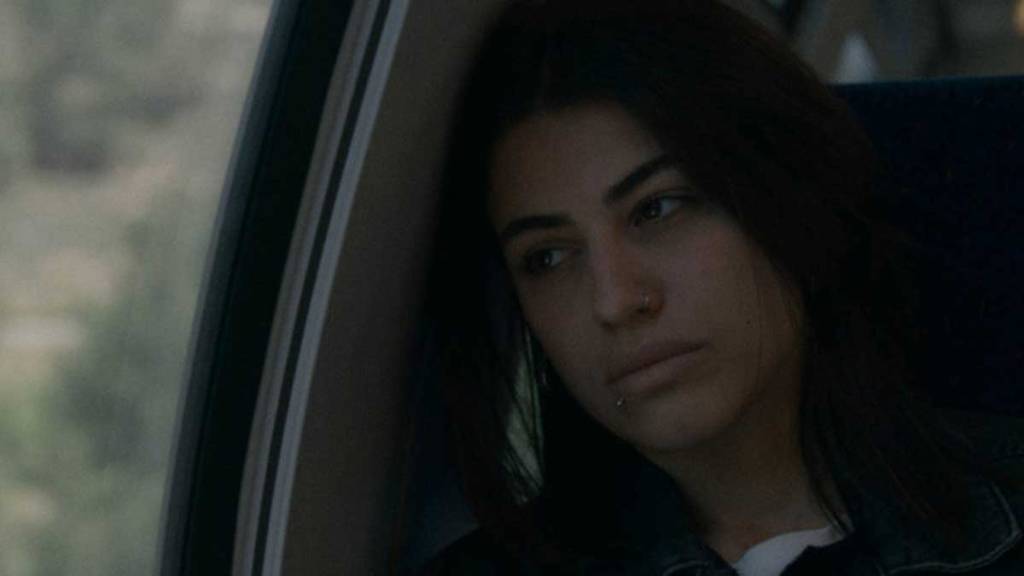
Director Scandar Copti starts the story with a young Arabic woman, Fifi (Manar Shehab in her first role) in Jerusalem who has been in a minor car accident. She is met by her family at the hospital and from this spins the story of her father, her brother, and her mother. And, ultimately, herself.
Fifi‘s brother Rami (Toufic Danial) has a complication. He has been in a relationship with a Jewish woman, Shirley (Shani Dahani), and doesn’t respond well when he finds out she is pregnant. He can’t understand why she won’t agree to abort the baby, considering how difficult it will make it for both of them. She cuts off contact with him because she says she is receiving threatening phone calls, warning her to stay away from him.
Then there is Fifi‘s father, who is consulting a lawyer, with Rami, because he has been caught embezzling money in his business. The advice is to pay off his accusers, no matter what it takes, because all that is his money. If he refuses, it will mean his reputation is also at risk and there may be criminal proceedings.
Fifi‘s mother, Hanan (Wafaa Aoun), is an intensely manipulative core of the family. She is a great example of internalised misogyny, and is also the gatekeeper of morality as she sees it. She is quite happy to manipulate the lives of her daughters, although doesn’t seem quite so concerned about her son or her husband.
As the layers are unpeeled, we start to see different view points. The most shocking is that of Shirley and there is a moment where you can’t quite believe what you are a being shown. It is chilling. The real narrative arc belongs to Fifi though, and she is given the final story where we see the reasons behind much of the subterfuge and twist and turns.
It feels like beneath every layer, is a culture and two religions that are joined by their need to police women and their bodies. The religious divide just makes this more toxic, where a relationship between an Arab and a Jewish person can be weaponised. We see people on both sides feeling like they are doing good by taking control of people‘s lives.
It looks like all of the actors are in their first role and this is Copti’s second feature. They are great performances all round.
It has an odd final shot, poetic which is a bit at odds with the rest of the film, and although it is a strong final note that I think tries to give us a salve against the bleakness, it felt a little like the filmmaker didn’t quite know how to finish the film. I don’t think there’s any salve that can fix this awful reality.
 fillums