
I find it hard to objectively critique Australian films, particularly when you’re at the premiere and the audience is jam-packed with people who worked on the film and their friends and family.
You really become aware of how much of a feat it is to get something together and up on the screen, and you feel proud for all of those people who have contributed to it. There is a particular joy with seeing Australian stories, and stories about the communities we live in and those who have been more marginalised, like migrants.
Director Adrian Ortega’s second feature is a deeply personal one, based loosely around his own mother. We are in the western suburbs of Melbourne in 1999, which doesn’t seem that long ago but is far enough away – pre-Google maps, pre-smart phones – to make it feel like it was another age.
The provocation for the film is around the construction disaster of the West Gate Bridge in 1970. Melbournians all know about it – one of the key arterial bridges to the city partially collapsed during construction, killing 35 workers, many of them migrants.
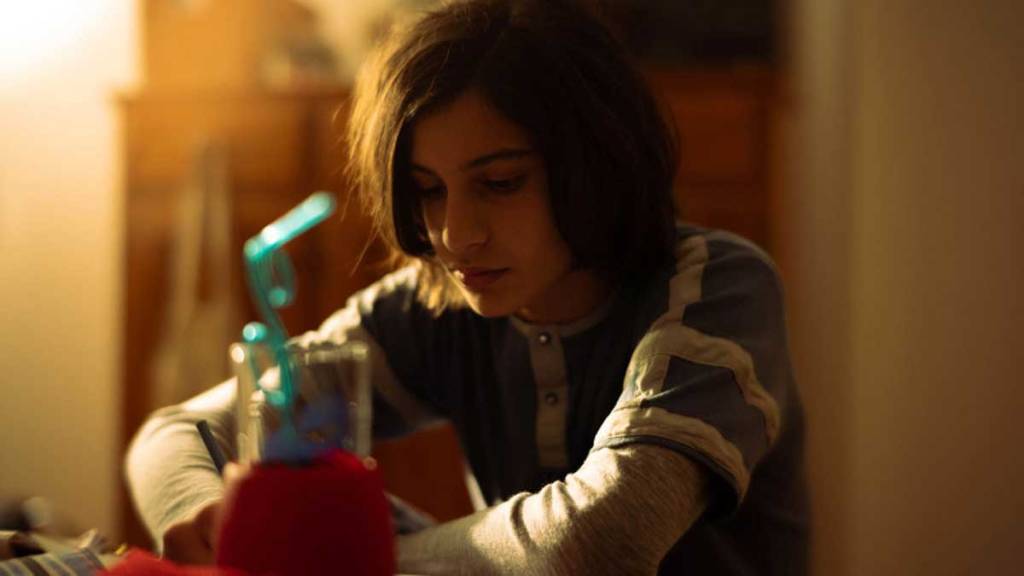
We are shown the story of Netta (Sarah Nicolazzo), whose father was one of those killed. She is a single mother to 12-year-old Julian (Max Nappo), and has a fractured relationship with her own mother, Guiseppina (Rosa Nix), who is a quintessentially ferocious Italian mama. Netta’s life is a bit of a mess and she has a seemingly endless amount of pride that stops her asking for help or even accepting it when it’s offered.
She can’t pay her rent and is at risk of being thrown out of her house. Her son Julian has some unspecified medical issue where he can’t sleep for days and then passes out but she’s suspicious of doctors and won’t let him take medication. She seems to be full of a boiling rage and the first words out of her mouth to anyone are usually belligerent or derogatory.
Behind it all, of course, is the unspoken grief of losing her father that she obviously has never dealt with. She seem to be particularly angry with her mother, despite the fact that her mother would have experienced a similar devastating loss, being suddenly a single parent. No one seems to be able to take the time out to listen and sit with each other’s grief though, so it just builds and festers.
The West Gate Bridge is used as an occasional motif but a little bit heavy-handedly. Netta won’t drive her car over it – maybe this was a common issue and it’s taken from true accounts but it felt a little obvious within the narrative.
What I struggled with was how relentlessly unlikable Netta is. Nicolazzo plays her character turned up to 11 and it is hard to see any nuance or feel much empathy for her. It just seems like a lot of shouting and pointless struggle. She can be yelling at her son one minute, saying exactly the same hurtful words her mother says to her, and the next minute saying how he is the most important person in her life. Are we supposed to see this as toxic? Ortega’s mother was in the audience and I wondered at how she felt at the depiction.
I think we’re supposed to empathise with Netta and the person next to me in the audience cried during a particularly emotional moment with Guiseppina but I really struggled to feel anything but frustration with her. It may have been the clunky dialogue or the lack of Netta’s accountability, for example when she assaults workmates and storms out, it seems these are all just things that we are supposed to understand and feel empathy for.
The film is dedicated to all the single mothers out there and yes, I can understand how this is showing a facet of that difficulty, for both Netta and her mother. I’m not sure it really added much to my understanding of this though and it seems we were being given broad strokes about something that is much more nuanced. I think if Ortega had given us a bit less melodrama, we might have learned more about the struggle and stoic perseverance he must have experienced within his family.
 fillums