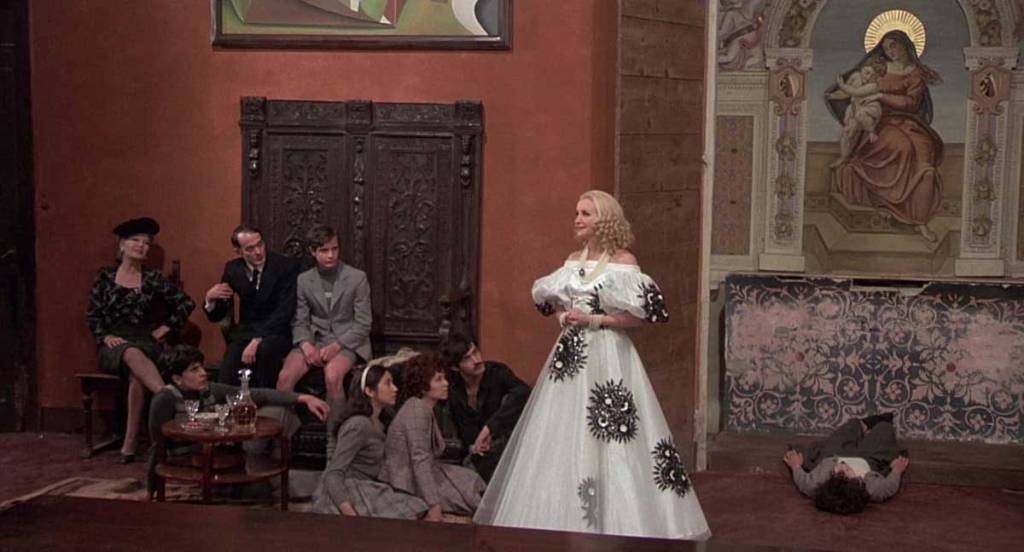

Pier Paolo Pasolini’s infamous film is one of those that looms large in film studies class. Like L’Age d’Or (1930) and Un Chien Andalou (1929), this was talked about as the most depraved film ever made. The one that couldn’t be shown in so many countries.
I happened upon a screening at the Cinema Nova – it is 50 years since it was made in 1975 – and I thought hard about whether I wanted to see it or not. There are some films I have seen in my life that have scenes of cruelty in them that I wish I could expunge from my mind. It almost felt like a badge of honour to have sat through it though so I booked a ticket.
Look, I think they’re going to be some spoilers in this review. Not spoilers about plot, but about some of the scenes that you will be forced to watch if you see this film.
It is a loose adaptation of the novel by the Marquis de Sade (he gave us the term sadism) and is set in the last years of World War II, where four fascist leaders have signed an agreement with each other. They will create their own special kingdom in a large isolated manor house and arrange for the selection of nine adolescent girls and nine adolescent boys.
These leaders, who not coincidentally represent the church, the government and the judiciary, have created a world where they have supreme power and no one can intervene – does that sound familiar? Their particular obsessions are forced sexual depravity and torture and you can see how, once you’re cut off from those who might stand up for you, anything can be done and no one will save you.
It’s a surprisingly slow, undramatic and almost banal story. The men are ridiculous, the women who surround them are like puppets, and the abused adolescents have that empty look of those who know help is not coming.
For a while, we don’t see the worst things on screen but we are left in no doubt about what is happening. It is mainly rape and assault, but then we enter the next circle of hell which is scopophilia and so there is lots of bathing in and eating of excrement. You can’t believe it’s going to get worse but it does, and there are a few scenes toward the end that, although we are cut off from sound and are watching from a distance like our antagonists, they are the hardest to watch. Think scalping, eye gouging, that kind of thing.
There have been a lot of reviews about this film, and lots of different ideas about what it might mean. There’s a lot of argument about whether the fascism is significant or not. It’s a bit of a pointless argument though, because it is the fascism that gives these people their sense of absolute power. You could also say that it is not fascism but men when they have given absolute power and depressingly you can see connections with what is happening in the world at the moment.
I’m not sure that the film is saying anything particularly profound, and in some ways it seems to be a single note. But I’m glad I’ve seen it. It means I won’t have to watch it again.
 fillums