
Imagine if Peter Greenaway was a millennial feminist making films today.
I don’t know if Alice Lowe is a millennial – I just googled it and she is just a GenXer but close enough – but she is definitely a feminist (well, who wouldn’t be?). She stars in and directs this darkly comedic romp that satirises the oppression of women over the last last few centuries without ever taking itself too seriously.
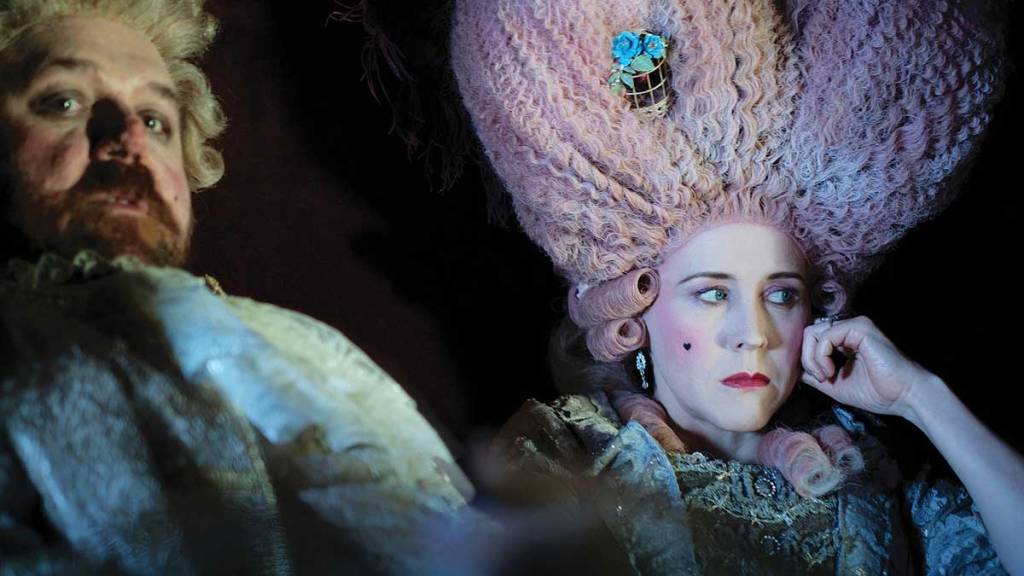
Agnes (Lowe) is a hapless woman, unhappy, dreaming of some elusive fate that she can’t quite grasp. In the 17th century, she yearns for a masked preacher (Aneurin Barnard) who is arrested and will be put to a horrible death. Her attempt to free him leads to her own end. And then we are in the 18th century where Agnes is a bored, bouffant-wigged wife of repugnant George (Nick Frost), dreaming of being captured by an outlaw (Barnard again) and advised by her winsome maid Meg (Tanya Reynolds) and crafty devil-like servant Scipio (Jacob Anderson who will always be know as Greyworm) to be the revolutionary he knows she is.
With each time shift, the same characters and actors are there with their roles changed to suit the times. George is variously Agnes’s dog, awful husband or menacing stalker, Meg is a servant or a friend who understands the world (and what she can achieve) much better than Agnes. Scipio, we can see, is the voice of change, the wisdom trying to get Agnes to see beyond any claptrap about soul mates that she has been indoctrinated with.
The most delight is taken with a shift to the 1980s and Lowe makes good use of our nostalgia and understanding of the humour in showing the big hair (so like the Georgian bouffant), highwayman outfits and pop star adulation. Barnard is now Alex Phoenix, a new romantic heart throb with Agnes relegated to obsessed groupie and Meg the feminist revolutionary she was always cut out to be.
There is a point to it all, even if this is hidden somewhat behind the sight gags and Blackadder-esque physical comedy. We can see who Agnes should really end up with, how her romanticisation of fate and soul mates is just another, prettier facet of patriarchy that tells women they don’t have a choice. It is perhaps telling how long it takes for our female heroines to assert their power.
The little visual clues across the centuries are amusing, as are the sight gags and in-jokes that make us feel warm and included. It reminded me a little of Lynn Shelton’s (Sword of Trust (2019)) deadpan humour overlain with the camp excesses of The Draughtsman’s Contract (1982). Or the knowing comedy of Pride and Prejudice and Zombies (2016), where audience knowledge of the tropes is key. There’s nothing auteur about this, though, it’s just an enjoyable ride.
 fillums