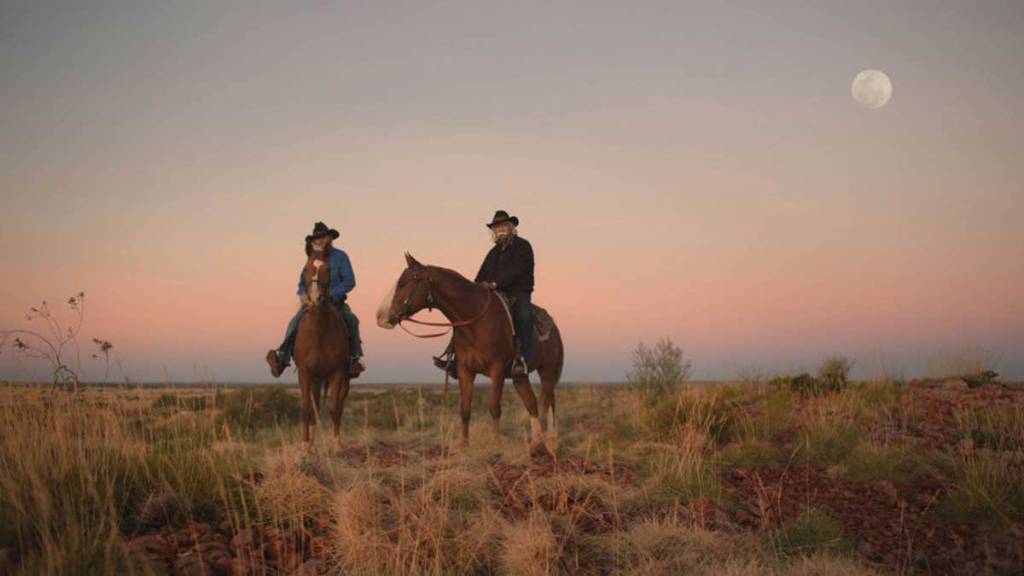

This is a beautifully made film about an important story.
Director Yaara Bou Melhem was making a film about mining in Western Australia and the impact it has had on Aboriginal Country. One of the first people she organised an interview was Maitland Parker, and she hastened to interview him as he was dying from mesothelioma.
He’s a Bunjima man from the Pilbara, and his Country includes Wittenoom, the site of Australia’s ill-fated blue asbestos mine. We all know the legacy of asbestos, how it was seen to be a wonder mineral, but caused sickness and death through lung diseases for countless workers.
What I didn’t know, is that the highest rates of mesothelioma in the world are amongst Aboriginal people in Western Australia. We are shown stark footage of one of the reasons for this – when the mine was abandoned, all of the tailings that look like black daemonic sludge against the red dust landscape, were left in place.
This means that wind and rain have carried the asbestos throughout the country, which of course has been easily abandoned by the miners and mining magnates and white settlers who profit from the mines and left to the Traditional Owners. Mulga Downs, the station owned by Laing Hancock who was the one who opened the Wittenoom mine, not only stands abandoned, but is locked up so that Aboriginal people can’t access their Country.
Maitland Parker was one of the people who lived and worked on Mulga Downs. He didn’t work at the mine but he played and travelled on Country throughout his youth and adulthood. His story is such a compelling one that Melhem decided to focus her entire film on his story and his passionate quest to have the land cleaned up and returned to Traditional Owners.
As I said, it’s an important story and one of the strengths of the film is the amount of time that we are able to spend with Maitland. When he visits his country, he is in a hazmat suit with a respirator because it is so contaminated. It is a surreal image, an Aboriginal person on their own Country, unable to touch the soil or breathe the air.
He is a kind and gentle man, a respected Elder in his community and someone who can speak with great tenderness and wisdom, but also with steel strength and resolution. He has been advocating for years for the Western Australian government to take responsibility for cleaning up the land. It is depressingly unsurprising that there has been little success.
What makes the film so intensely sad is that we get to watch him deteriorate and pass away. He believed so strongly in getting the word out that he gave permission for the film to continue and for his family members to keep helping with the making of the film, even allowing the film makers access to his burial and the families grieving.
As documentaries go, it has a very simple message that it stretches out across the length of the film. I think this may be challenging for some people, but it is worth taking the time to sit with the film and let the imagery of the connection between country and body sink in. You really feel the ancestors walking with Maitland, giving him the strength to keep going
There are some statistics at the end that the estimated cost for clean up is $150 million and the WA government received over $12 billion from mining just in 2023.
There is a call to action – cleanupwittenoom.com is a website where you can show support and make donations. The filmmakers will also launch community screenings of the film next year where you can organise to have a screening in your local school or workplace or community space – go to yurlucountry.com to find out more.

