
It feels rare to watch a film that centres itself on female friendship. This seems to be an important element in this gentle drama, an underlying message about the persistence of community.
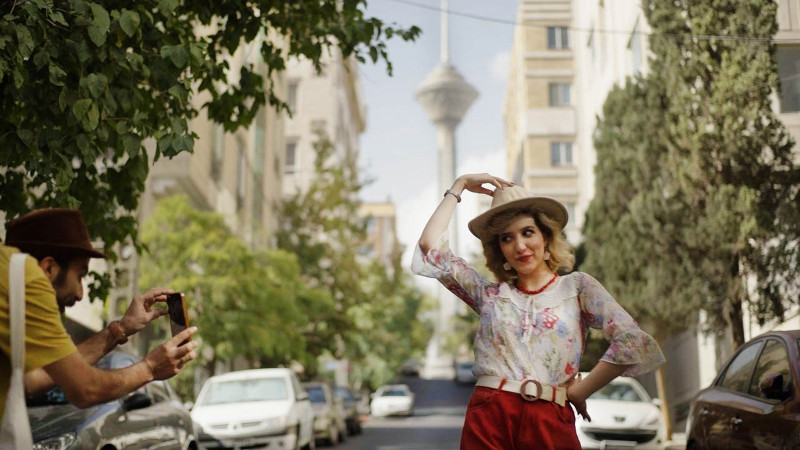
Shot in secret in Iran, directors Maryam Ataei and Hossein Keshavarz allow a warm and gentle story to unfold about two young female artists, Hanna (Hana Mana) and Pari (Mahshad Bahram), living in Tehran. They are both living independently, making art that is seen as subversive by the regime, walking the streets without their hijabs, and seeming unapologetic about the way they are living their lives.
My understanding of Iran is built so much from the films I watch, which is usually full of black shrouded women and authoritarian men. This upends these tropes by showing the warmth and freedom that exists at a community level.
What slowly begins to emerge though, is that in a totalitarian regime, you are not always sure who to trust. There are moments for both women where their freedom is undermined and we watch the threads of community pull together to support them.
In a fascinating Q&A after the film, the directors talked about how they managed to get all of the footage and then smuggle it out of Iran. For scenes out on the street, they would rehearse and have sound equipment hidden in a bag and then go into the street and film. They would do a scene and loop around for notes and then go again. Their very small camera is a type that is more common with influencers now, which made it easier to be undetected.
We see scenes in markets and shops and cafes. The filmmakers would ask permission from people on the streets who were so helpful and supportive. It underlines their theme that it is easy to feel isolated but there is always connection.
They said that the real danger was in being stopped while filming is happening, because then they can arrest you or shut down the film making. Once the film gets into a festival or is picked up abroad, it is less likely that the actors or crew will be arrested. There was always a fear about who you could trust though – a scene that needed extras to play the audience of a show had to be filled with friends and crew and family as you could not be sure that a stranger wasn’t an informant.
The Kiarostami connection comes from the title. The title of his film Where is the Friend’s House? (1987) references a poem and it seemed fitting to name this film after a poem that was written in response. They have transposed his ideas from rural Iran to contemporary urban life but you can also see a connecting theme of helping friends and Kiarostami’s penchant for long takes.
The two leads are remarkable, particularly Hanna who seems to skip and dance through each scene. She brings a vitality that you can see would be mesmerising. Pari is her opposite in some ways, more thoughtful and deep thinking, although still driven emotionally when it comes to her art. What stands out is a generational shift – the connections young people have are now with friends more than family, and they are the ones who they will call in a crisis.

