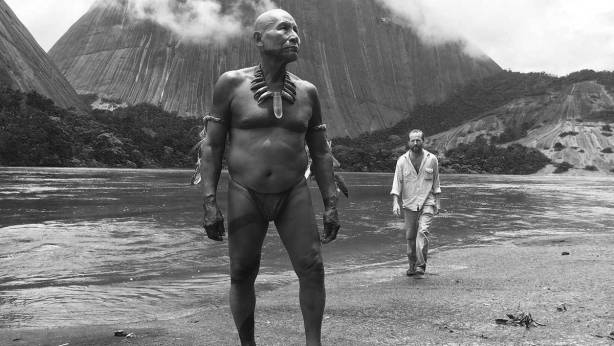
Image via embraceoftheserpent.oscilloscope.net
I recommend seeing a film you know nothing about on a Sunday morning. I was the only person in one of Nova’s subterranean cinemas for this black and white Colombian journey into the Amazon and a history of cultural decimation. There are two overlapping stories, both of white scientists on a search for a rare healing plant, guided through the jungle by loner Karamakate and separated by 30 years. Continue reading
 I love film festivals. The weekend I chose to be in Melbourne, the Iranian Film festival just happened to be on. As my loyal readers will know, I have a penchant for Iranian films – Rhino Season,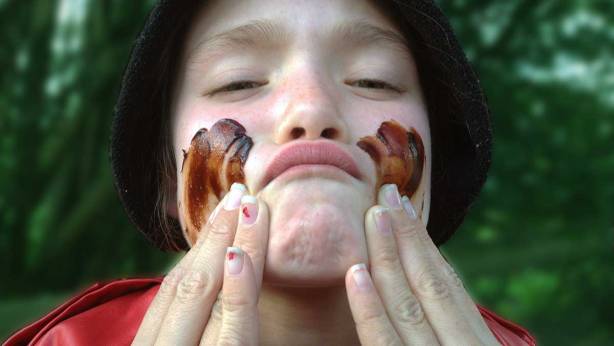

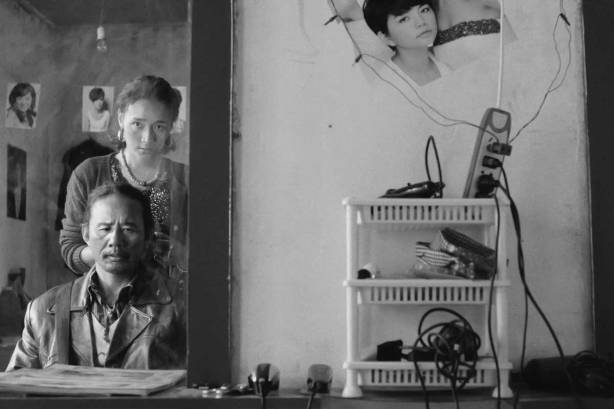 What a beautiful and sad film. Set in Tibet, we first meet Tharlo (pronounced tarlo), or Ponytail as he is used to being called, as he recites the words of Mao Tse-tung that he learned by heart when he was nine. He speaks of death being inevitable but not all deaths being the same significance; death after serving the people is ‘heavier than Mount Tai’ but death after serving the fascists is ‘as light as a feather’. He is reciting this to the local police chief who remarks that, with such a memory, he had great promise as a child and his forty years as shepherd, building up a small living, is a waste.
  Gosh this movie sounded good. The synopsis used words like ‘breathtaking’, ‘existential odyssey’, ‘abstract allegory’ and ‘a political version of a Beckett play.’ It really wasn’t any of those things though it has an interesting topic and some nice moments. It is a film in two distinct parts: we see Nero, a teen of Mexican origin who grew up in LA but was deported with his parents, trying to cross the border back to the US. In LA he meets up with his brother but not before being picked up by the police for looking too Mexican in a wealthy area of Beverley Hills. Nero’s plan is to be a ‘Greencard soldier’ where he can join the US military in exchange for a Greencard.
  I have no idea what this Iranian film is about. It’s stylish, unconventional and full of beautiful moments and promise but ultimately I felt I was missing out on a cultural context that may have made sense of the story. It begins as a drama with a man, Babak, recounting to an investigator the events that had led up to that moment. We then see the events unfold; he is sent to make a report on a man who has killed himself on the island of Qeshm. He was an ‘exile’ living alone in a derelict boat in the middle of a desert cemetery and Babak can see that he was murdered. His investigations begin to reveal surreal and confusing facts.
 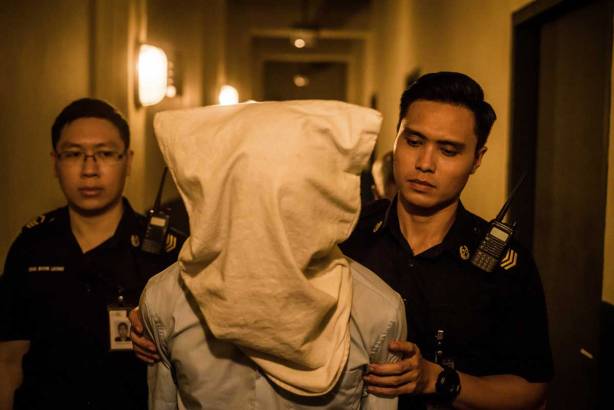 I cried at the end of this film, I’m not sure why. There is a quiet reverence to it and beauty that is at odds with its setting. By Singaporean director Boo Junfeng, the setting is a Malay maximum security prison where Aiman has just begun work as a guard. He seems kind, conscientious, though emotionally distant from his only sister. Soon he is taken under the wing of Rahim, the prison executioner, who teaches him how to ‘kill well’, with the least pain and the most compassion.
 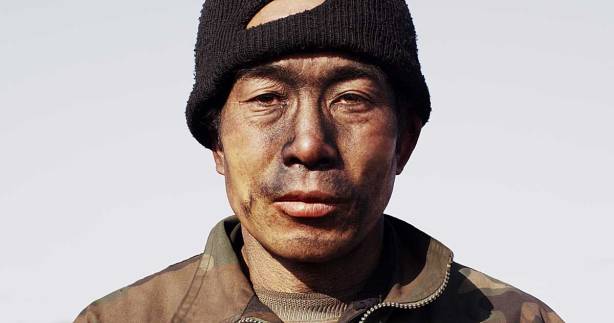 I like to be shown rather than told and this Chinese documentary about the vast coal mines of Inner Mongolia did just that. Made up of dialogue-free footage, we are taken on an absorbing and sobering visual journey. The behemoth of the title refers to the monster of the Bible who devours mountains and, through a loose translation of Dante’s Divine Comedy, we journey through the Purgatory, Hell and Paradise of China’s insatiable appetite for industrial production.
  Not a MIFF film. I took a detour at ACMI this morning as I waited for my first film session of the day and watched Del Kathryn Barton’s sumptuous animation of Oscar Wilde’s short story, The Nightingale and the Rose.
