
This will hit you in the feels if you are at all a fan of Mary Oliver‘s poetry and make you want to go out and buy one of her books if you are not.
A famously reclusive and private person, we are lucky that in the latest stages of her life she opened herself up a little bit more to the world and attended many public readings of her works.
Mary began writing poetry in her early teens, and never seem to waiver in her confidence that being in nature and writing poetry were enough.
Visually, the documentary is full of talking celebrity heads, many reciting their favourite poems and talking about how important Mary Oliver is to the world. The most interesting are those people who knew her well – John Waters in particular lived a few doors down in Provincetown Massachusetts and was obviously a good friend. This is where we get a little bit of a glimpse into the inner world of Mary Oliver.
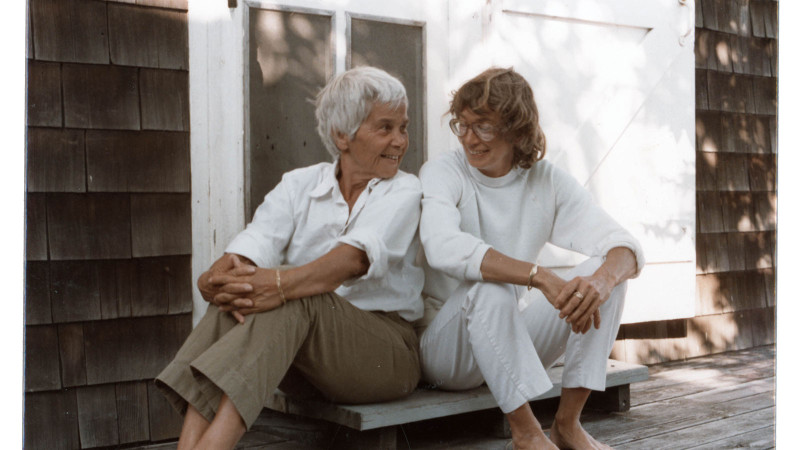
She met her partner Molly in her 20s and they went on to have a lifelong partnership with the seemingly much more outwardly confident Molly becoming her literary agent and a buffer between May and the public world. Living in Provincetown also seem to be a significant part of her life, it was a haven for queer people in the last half of the 20th century and it also gave her access to relatively unspoiled nature.
Often called a nature poet, something that she bristled at, she seems to have an ability to quietly observe the world around her and speak truth that feels particularly profound at certain points in your life.
She was not without public criticism, which seemed to increase as she became more successful. There was an expectation that, as a lesbian, she might speak out more during the AIDS crisis in the 80s and 90s. She was no shrinking violet, as attested to by Waters, but she was intensely private and, as revealed by her poetry and some of her later interviews, she also strongly guarded her inner world.
Visually, as well as the talking heads, the documentary uses a tapestry of archival imagery to create something of a visual montage to illustrate her words. Mostly this works well, particularly when talking about animals and the sea and trees and earth. Occasionally it jars, as do the sudden introductions of celebrities reading her poems without any context of why they are there – Helena Bonham Carter, Steve Buscemi, Oprah, all interesting people but contextually jarring.
There is a richness to the last part of the film where we see and hear Mary much more. The passing of Molly later in her life gave her a choice, as she said, to retreat to her cabin and close her door or to throw all her doors open. We are lucky that she chose the latter.
I won’t be the only one inclined to go out and buy a book of her poetry or to do as she says – make an appointment tomorrow to be creative.

