
How do you go beyond shocking statistics that people seem to have become immune to?
The statistics around life outcomes for Aboriginal people in Australia are shocking. We might assume this is common knowledge, but just a bit of time on social media and even chatting with friends can show that some people still believe the myth that Aboriginal people somehow have it easy.
The Facing the Numbers project recognises that (quoted from their website here https://facingthenumbers.com.au)
- First Nations people in Australia are the most disproportionately incarcerated people in the world – making up 37% of the prison population while comprising only 3.8% of the total Australian population.
- There have been at least 636 First Nations deaths in custody since the 1991 Royal Commission into Aboriginal Deaths in Custody – with only one conviction made.
- Many Australians have heard these statistics. Fewer understand the systemic issues behind them, or how they translate into human stories and experiences.
Director Tyson Perkins and director/producer Kieran Satour have created an interesting and artistic documentary that brings us a story behind each statistic. They “put Australians in the shoes of five First Nations people harmed by the legal system – grounded in truth-telling, and in the strength of people still protecting Country, culture and community despite it.”
It builds on the idea of storytelling, so essential to Aboriginal cultures, in passing on wisdom and cautionary tales to young people. We see a statistic on the screen, and then we hear the voice of a storyteller and we are shown a re-enactment of their story. Each section ends with us meeting this person, putting the face to the name.
There is Uncle Widdy, pulled from his school and family and sent to Kinchela Boys Home. The boys were stripped of names and given numbers – he was number 36 – beaten, raped, brutalised and punished for just about anything. He refers to it as a concentration camp.
We learn how lost who he was when he finally left the home, the part that alcohol played to help him cope, how his many children all had issues with addiction and the law. In the Q&A afterwards, he talked about the legacy of generational trauma that gets passed down through DNA and memory and nurture from generation to generation.
We see the story of Mark Mason, a Gomeroi man and father who was brutalised by police and shot twice in the back. The coroner found that it was a self-defence shooting by police and his family have been campaigning ever since for the bodycam footage to be released.
The stories are heartbreaking, about abuse of children, about billions of dollars being spent every year on Aboriginal people but still many living in poverty. So many children in detention. So many experiencing police brutality and deaths in custody.
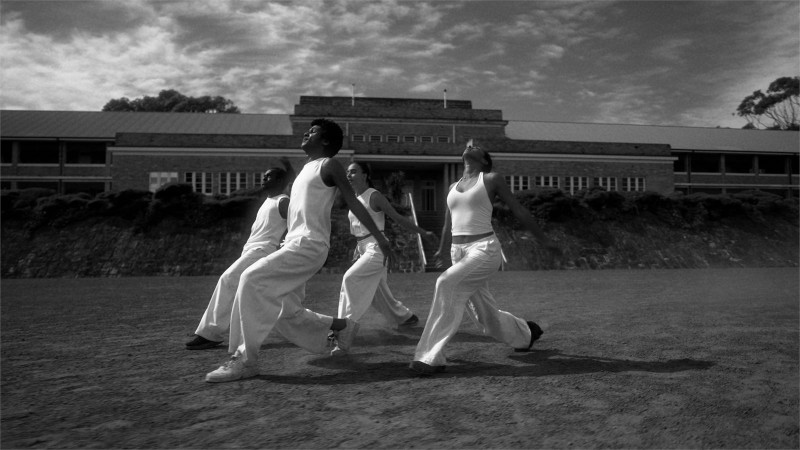
We also see dance and poetry and song. These are some of the more uplifting moments where we are hearing words of strength and resilience and resistance.
At the Q&A after the film, we heard from Uncle Widdy (who loves to talk) and Mark Mason’s daughter who continues the fight for justice for her father. It is much harder to move on from the terrible numbers when you have seen the faces of those affected.

